Wednesday, January 19, 2022

 Getting Kids Excited about Reading! 

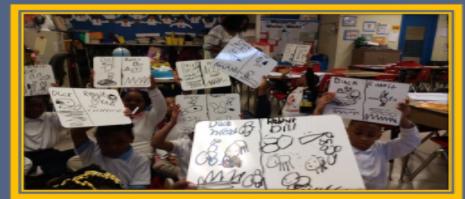
Often times it's a challenge to get students reading and staying engaged with books. Particularly in this era of time when books have to compete with so many technology resources. Yet, creating a love for books is wonderful way to help kids be life-long learners. I always tell my own children and students alike how reading can take you places that you cannot go and how good readers can practically teach themselves new things daily. All of these clichés sound good but rarely do they tempt kids to want to read more. Therefore, having school-wide reading events can spark students' desire to read and also build students' engagement while reading! I am especially excited about the upcoming World Read Aloud Day event! As a literacy coach, I often stress the importance of reading aloud to students so this event really illustrates not only the importance of reading aloud but just how exciting and fun reading can be. So we're on the count down at our school to World Read Aloud Day! Are you? 


Get Ready for World Read Aloud Day!


motionmailapp.com 


Tuesday, August 17, 2021

Welcome back to another school year. Although this school year, much like the last is a bit out of the norm, I am hopeful for the a great year. With the start of the school year, there is always a lot to do as we prepare for our students. In midst of it all, we must remember to take time for ourselves and not only practice self care, but 'soul care.' Soul Care is a daily process of cultivating healthy thought patterns and taking inventory of our emotions. This practice is extremely helpful for reflection and essentially helps to build gratitude and motivation. 
During my teacher training, my program required us to complete written reflections of each day of our student teaching. Well naturally, I viewed the process as daunting initially; however, after doing it for a while, I found it to be a great means of relaxation and most importantly, it forced me to take inventory and ownership of my actions as a student teacher. As I think back, this simple process helped me to be a much better teacher. You may be wondering have I continued this process and the answer is yes! Although I am no longer in the classroom, I still journal my reflections each day and I think of it as Soul Care. Whether you think of it as Soul Care or Self Care, take time to reflect daily. This process will help you to inspect, record, and analyze your day. Daily reflections can become a power ally and inevitably help to build your self awareness, especially when so much of what we plan can change in the course of a day! 


Monday, November 2, 2020


As teachers, we are always looking for ways to get the biggest bang for our buck during instruction. Therefore, when you're planning always determine how to make your literacy instruction align with not only the standards, but also align to other areas within the Balanced Literacy Model for instruction. By doing so, your students see the cohesion of your lessons and fundamentally have a stronger foundation to transfer the learning. Take a moment to read the quick tip on reading and writing instruction below.

Hopefully, you'll find it helpful to your teaching!


Ways Reading Can Support Writing Instruction


You may have heard the phrases: “Writing helps to grow readers and Reading helps writers grow!” or you may have heard: “Read like a writer and write like a reader!” Well these phrases are actually true! Good readers most times become good writers and good writers are often good readers. 

So here’s a quick Literacy Tip for you…

When planning your reading instruction allow your writing instruction to be like the flip side of the coin. Plan reading mini lessons that will strengthen your writing mini-lessons. For example, when teaching narrative writing, choose read alouds that display great small moment stories. Check out this site to find

 The Top 10 Anchor (Mentor) Text for Small Moment Writing.

When you expose your students to great narrative small moment stories, they will better be able to relate to the concept of a small moment. Additionally, you can implement reading strategies that will essentially help them to be better readers and writers! 


Thursday, March 19, 2020

Potential is Always Bigger Than Problem! 

"Potential is Always Bigger than the Problem." I heard this quote recently and like many profound quotes that I hear, I wrote it down. In the current state of the world, it can be easy to focus on the pandemic and allow it to force us into negative thinking.  In life, we often focus on the problems we encounter or the problems we foresee. Yet, concentrating on the negative can often cause you to become stuck and unable to develop or tap into the infinite potential that we all possess.

This is often the case in the realm of education as well. Unfortunately, we encounter many different challenges that often change the course of our school year. We begin the year with a multitude of goals, but life has a way of interrupting the best made plans, such is the case with the Corona-virus pandemic. We are faced with a significant challenge that is constantly changing the scope of how we currently live and how the education system functions. To say that that the Corona-Virus has "thrown us for a loop," is an understatement. Yet, educators  are known for exhibiting flexibility and it has been amazing to see the teamwork and camaraderie that many have shown in our schools. This shows that our potential is always bigger than the problem. We are greater when we operate collectively to achieve common goals. Life may have thrown us for a loop, but it also has a way of forcing us to connect and cooperate in ways that has drawn us back to what matters most in life and hopefully compels us to see that our collective potential is bigger than our current problem. Check out the link to view Corona-Virus resources for teaching, learning and thinking critically.


Sunday, December 2, 2018

Motivating Readers

Recently I had a discussion with one of my colleagues about how can we motivate our students to read. Needless to say, we were both feeling a bit discouraged about the willingness of the children's desire to read on a daily basis. After much thought about the subject, I began to ponder some of the ways that I have tried to inspire our young readers to read, from implementing the "Get Caught Reading campaign to providing seasonal reading challenges. Yet sadly, many of these initiatives have been met with apprehension from our students.

Research has shown that students are motivated to read when they feel a sense of accomplishment that often leads to increased motivation to continue to pursue more challenging tasks. When a child does not have a sense of accomplishment with a task, they are often resistant in participating or continuing to engage in it. Teaching students how to choose books that are "just right" and allowing them to choose the kinds of books they want to read has long been the gateway to enabling students to become more engaged readers. Likewise, reading aloud to students enables them to see how effective readers interact with text and essentially use reading strategies to comprehend text. Moreover, creating a classroom environment that is literacy rich allows children to see the value in being or becoming good readers.

If you are still embracing the challenge of creating life-long readers, here are a few simple ideas that you can try. I sincerely hope that you are still in the fight, after all, without literacy, we have nothing to build a foundation on!


Monday, September 10, 2018


After the Icebreakers...Sustaining Classroom Community Throughout the school year!

Children learn best when they feel they are apart of a community in which everyone feels accepted and individuality is  encouraged. -Scholastic

The start of a new school year always brings forth new opportunities to fine tune both your craft of teaching
and your ability to create a classroom culture that thrives with healthy community.

Classroom Community is also one important aspect of  education that transcends across all grade levels.
It is the first step to ensuring that learning occurs. As the education adage states:
“If you can’t reach them, you can’t teach them!” So what do you do to continue to build community after the icebreakers?

Take a look at this link for a couple of ideas to incorporate into your instruction
that will continue to enhance your classroom community after the icebreakers are done. :-)

Saturday, December 2, 2017

Winter break is upon us! The break allows both teachers and students to renew their spirits and summon the tenacity that will surely be needed to complete the school year. Yet, during the academic down time, it is important to help our students maintain their motivation to read. Consequently, we ask: How do we keep kids reading during winter break when a book is in competition with their favorite toy? Here are a few ideas that could possibly spark their interest and put some fire in their engines during the down time.

  • First and foremost, send a book home! What better gift to give than the one that keeps on giving...a book! 
  • Encourage students to write a book review that they can bring to school upon their return to share with the class. (Book Review Link (online) or Written format based on an anchor chart)
  • Use the book reviews to spark Book Talks! Easing back into the swing of things post winter break can be a challenging task to say the least, so why not plan to have book talks using the students' book reviews. Undoubtedly, the students will be engaged because they have a buy-in.
  • Spark a friendly competition with a neighboring class! Challenge the students to read at least 3 or more books over winter break. The given number may sound minimal; however, give them a goal that won't seem too unattainable then they will hopefully strive to surpass it.  Also, remember 3x18 (average number of students in a class) will mean that your class can possibly read 45 books over the break!
  • Encourage your students to learn more about 1 topic that they may have interest in. Have them to list the new facts in a fun way. Certainly they will have to read via internet or a book to gather the information. 
Try one or more these helpful tips to help keep your students motivated to read and progressing toward their reading goals during the winter break. 

Monday, October 23, 2017

7102eccb2f95066a59a70e297796ffc9.png Teacher Tips
Effective Literacy Strategies at your fingertips!


What can I do with a Read Aloud?


Implement formative assessment strategies to monitor comprehension such as:  
  • Questioning
  • Whiteboard Responses
  • Reader's’ Response Journals
  • Stop and Jots
  • Turn and Talk with Observation
  • Cite Text Evidence based upon questioning at the end of the Read Aloud


Questions to Ponder as you plan:
Why is reading aloud important for formative assessment?
  • What is a read aloud routine?
  • How do I collect formative assessment data during a read aloud?
  • How do I provide feedback to students?
  • How can students monitor their own learning during a read aloud?
Formative Assessment Strategy:
Student Responses on Whiteboards and Response Journals in use during a Read Aloud


How does this strategy look in action?

RACapture.PNGRRJ1.jpg

Tuesday, August 8, 2017

Off to a Great Start!

As the beginning of the school year approaches, every stakeholder in the learning process would like to give students the best possible start as they embark on a new year of learning. One of the best, and perhaps the most significant way to afford students to a successful school year is to immerse them in a literacy rich classroom environment. Research has shown that reading is a fundamental skill that defines the success or failure of students (Reading Rockets, 2017). By creating a classroom that facilitates and emphasizes the importance of speaking, reading and writing you are enabling your students a successful start. Creating a literacy rich environment not only involves reflection and thoughtful design, but it also requires thoughtful selection of classroom materials that will facilitate language and literacy opportunities.
Read More...


Monday, March 6, 2017

The Need for Interdisciplinary Studies in Classrooms

As we interact daily in our world and within our society it is rare that we encounter individuals or circumstances in isolation. For example, if I go to the grocery store, I won't be able to shop without engaging in reading, math, and possibly other disciplines while I am there. If I even attempt to try to handle my shopping experience in isolated facets, such as reading to find the items on my shopping list and then returning to the list to determine the cost of all of the items I collected, it would not only make my experience more frustrating but also time consuming to say the least.

Likewise, we cannot afford to teach our students in an isolated fashion. When students are questioned about the various disciplines that they study in school, it is quite disturbing to hear them speak of their learning as, " Oh, we are doing math right now and later we will do reading." 😚 There is indeed a growing need for a more interdisciplinary curriculum in our schools. We are doing our students a disservice to continue separate subject areas of learning as unrelated bodies of knowledge. This grave disconnect is not allowing our students to see how school is related to not only their current lives, but their future lives as well. The school day has become so fragmented that students and teachers alike are simply going through the motions and not grasping or grappling with what school should and need to be about, which is interrelated knowledge that can easily be transferred into the lives of the individuals that we teach! We have to bridge the gaps of teaching and learning. Balanced Literacy sets the stage for interdisciplinary studies. Yet, it is important that our pedagogy reflects the fluidity of the structure. Essentially, it is important that our teaching mirrors less choppiness and more flow!


To learn more and to try to incorporate this approach to teaching in your classroom, follow this link. Also, check out the International Literacy Association's Bridges Units of instruction on Interdisciplinary Studies here.
***Remember to always let your standards/indicators, students, and formative and summative assessment drive your instruction! 😊

Thursday, February 2, 2017

World Read Aloud Day is February 16th! Get ready to fall in love with a great book! Follow the link to register.

Friday, December 16, 2016

You never Take a Break from Learning!

Recently my daughter hopped in the car and said "Mommy, I am so excited we don't have to bring anything to school tomorrow because we aren't going to be doing any learning!" Well, it was the day before winter break and I guess you can imagine the expression that came upon my face as I quickly responded, " You never take a break from learning!" Of course, my husband, being his little girl's saving grace, tried to recover for her and said calm down "teaching mommy", she means formal learning. Although his response helped me to exhale and agree it also still disturbed me that my daughter spoke of learning as an isolated occurrence in her life that only happens during the school day. With this in mind, I began to explain to her that learning occurs everyday and in all her experiences. Then I began thinking, is the learning in school really so far removed from what children experience in their daily lives? If so, we as educators need to reevaluate our practices to be sure that our children can see the connection to what they are learning in school and how it relates to their daily lives. Only then will we, as teachers be able to help students to see that what they are learning does matter and everyday you are constantly learning, no matter where you are. Life is learning and just like you can't take a break from life, you should never take a break from learning!

To keep learning ongoing and fun during the holidays, check out this helpful site that offers great ideas to make learning both fun and relative!

Friday, November 4, 2016

Rescuing Emergent Readers

Emergent Readers need explicit instruction of basic letter sound principles. They also benefit most from dictation lessons that allows them to hear the letter sounds and record each sound separately to see how a combination of letters makes up a word. Without these basic fundamental strategies, emergent readers may often struggle to get the gist of simple Consonant, Vowel, Consonant (CVC) words that they maybe able to segment the sounds and read. The use of Elkonin boxes is an effective tool that allows students to segment and record the CVC words. They allow for both visual and tactile instructional strategies during guided writing for your emergent readers. Through the use of Elkonin Boxes, students will become adept in demonstrating letter-sound relationships and gradually become proficient readers and writers. To read more about Elkonin Boxes follow the link. Elkonin Boxes Research

Rescuing Emergent Readers

Emergent Readers need explicit instruction of basic letter sound principles. They also benefit most from dictation lessons that allows them to hear the letter sounds and record each sound separately to see how a combination of letters makes up a word. Without these basic fundamental strategies, emergent readers may often struggle to get the gist of simple Consonant, Vowel, Consonant (CVC) words that they maybe able to segment the sounds and read. The use of Elkonin boxes is an effective tool that allows students to segment and record the CVC words. They allow for both visual and tactile instructional strategies during guided writing for your emergent readers. Through the use of Elkonin Boxes, students will become adept in demonstrating letter-sound relationships and gradually become proficient readers and writers. To read more about Elkonin Boxes follow the link.Elkonin Boxes Research

Thursday, October 6, 2016

Collaboration Breeds Success!


Teaching in today's classrooms poses increasing challenges to keep students engaged. Student engagement is not a small task to say the least. Yet, we know that when students are interested, motivated and captivated by the delivery of instruction, learning occurs. As teachers work hard to deliver meaningful instruction, even the most seasoned educator can become depleted of ideas and strategies as they plan lessons. Therefore, the need for collaboration in education is essential to best serve students. Consequently, collaboration is often approached with a bit of skepticism in the realm education, due to the isolated nature of teaching that has occurred for so long.

Coaching allows for the much needed proximity and interactive conversations that breeds the collaborative connections that will benefit both educators and students alike. When students see positive interactions among educators, they see first hand how important it is to be able to work effectively in a school community for a common purpose. Through collaboration, administrators, coaches and teachers are fundamentally partners working to assist students to become successful. Moreover the learning community demonstrates a unified commitment to student SUCCESS!

Ways to build and enhance a collaborative school community: 
  • Identify a purpose for collaborating: Professional Learning Communities are great vehicles to navigate towards a common goal.
  • Practice leads to Promotion: The more you collaborate as a professional, you can better promote and demonstrate effective collaboration skills in your classroom. 
  • Time: Designated time is critical to collaboration success. The lack of time and consistency can quickly diffuse agency. 
  • Understanding of how to effectively collaborate: Lack of  understanding of the "how" and "why" is the root cause of ineffective collaboration. Establishing group norms helps each member to remain focused on the purpose and the plans.
  • Freedom to explore and express various points of view: It is important to value everyone's point of view. An appreciation for diversity can lead to rich learning experiences.
  • Communication is key: Active listening is a key component to effective communication when collaborating. Everyone should have a voice in discussion. EVERYONE has something to bring to the table!

Monday, August 22, 2016


School is in! Yes, it seems that the summer zoomed by and now we hear the pitter, patter, and echoing chatter of the children in the hallways. It's easy to get lost amidst the chaos of the back to school routine. So here are a few pointers to ease your way back into the school.


  • Don't take on too much too soon. Plan ahead by logging in dates for meetings and upcoming events. Planning ahead helps you to not over-plan as well.
  • Arrive on time to work and scheduled events. This will help you to not feel rushed and hurried, which can essentially alleviate a lot of stress.
  • Make lesson planning fun and interesting by planning in places other than work. Take advantage of the final days of summer by planning in the park or have an alfresco dinning experience with a teacher friend to plan. Sometimes being in a different place and space can open up a world of possibility for creativity. 
Hopefully this advice is helpful to help you to ease back into the routine of school. Remember have a positive attitude because it gives you power over your circumstances! Welcome Back!!!

Tuesday, July 12, 2016

Summer Reading...More than a Kid Thing!

Summer is in full swing and hopefully as I pen this post most of you are reading or have plans to read throughout the summer. As educators, time off is cherished time to relax and not feel compelled to meet deadlines or due dates; yet, just like our students if we loose sight of our vision our focus will undoubtedly be clouded when our work resumes. In essence, if we don't "practice what we preach" we are not modeling great reading habits for our children and/or students. As you might have guessed, reading is one of my favorite past times so it's easy for me to be a cheerleader of consistent reading, but in reality I think we are all fans of reading because it is a life skill, but we don't want to be forced to read what others want us to. Inevitably, CHOICE is a huge motivating factor for everyone. Therefore, find interesting items that will keep you reading throughout the summer. After-all we can't promote what we don't do ourselves! :-)

Thursday, April 21, 2016

Getting Ready for the Test!

We have reached that time of year again. It's the time of year that students are urged to demonstrate how much they have learned within the school year on 1 high stakes test! Undoubtedly, it can be a stressful time for both students and teachers. Certainly 1 test cannot illustrate how much progress your students have accomplished the entire school year. Yet; as we approach this inevitable time of year, knowing that high stakes testing will probably be around for a while, we have to ask ourselves, how can we prepare our students and hinder some of the anxiety that comes along with testing? We must remember: "Our anxiety comes from wanting to control what the future holds. Preparation begins at the beginning of the school year. Teaching students the critical skills that they need to conquer both the test and the anxieties that may come along with it begins long before time for the TEST. Certainly we are not in control of the future, but starting with the "end in mind" leads us to prepare for how we would like to end our school year! Consider sharing the following test taking advice to help your students SCORE on the TEST!


Successful test taking avoids carelessness. Remember you are demonstrating your ability to understand course material or perform certain tasks. Analyze your previous tests and tasks that have been provided by your teachers. Take into to account that each test prepares you for the next.
Consider things that you need beforehand to avoid panic when preparing for tests or the task at hand. This avoids anxiety and stress. Keep a good attitude and remind yourself that you will do your best.
Orient yourself with the objectives of the test to eliminate obvious incorrect answers.
Read and Review if you have time. Resist the urge to rush to complete your exams. Check to make sure that you have answered all the questions, and have not made any errors or mis-marked any questions.
Examine your tests and make sure you have evaluated it in its entirety before completion and essentially all of your efforts will be rewarded!
Hopefully, your students will SCORE successfully if they consider all of the following steps!

Thursday, February 18, 2016

Dig Deeper when Reading and Responding to Text

Helping students to think deeper about what they are reading can be a laborious task when students lack the necessary tools needed to share their thinking. By incorporating the use of thinking stems, students will have the tools to dig deeper and really ponder the books they are reading as well as give thorough written responses about their connections while reading. Encouraging the use of thinking stems can boost your students' use of reading skills and strategies such as visualizing, inferring, questioning, and synthesizing, among many others. As students continue to use thinking stems, they will gradually become critical thinkers, readers, and writers! Try using these thinking stems and maybe even creating a thinking stems rubric to assess their path to becoming thoughtful readers!